

Angled Forced Conditioning
Angled Forced Conditioning: Innovative Grain Moistening Solution
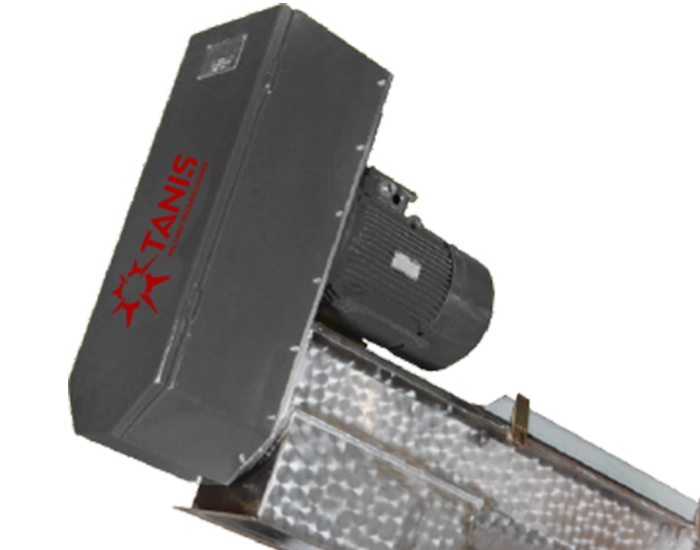
The Angled Forced Conditioning system produced by Tanış A.Ş. is an innovative technology that moistens your grains quickly and homogeneously. Developed with our experience in wheat, corn, and barley processing equipment at our Gaziantep-based production facilities, this efficient conditioning solution increases mill efficiency by providing controlled moistening and effective penetration.
Angled Forced Conditioning is a special conditioning system that accelerates and homogenizes the grain moistening process before grinding. Its main function is to create ideal conditioning conditions by providing rapid and equal moisture penetration to grain kernels. Unlike traditional systems, it optimizes the conditioning process by combining forced moisture application and angled design principles.
Its critical role in the mill conditioning stage directly affects grinding efficiency. Moisture that optimally penetrates the wheat kernel facilitates bran-endosperm separation and ensures ideal separation of bran and flour during grinding. This process is critically important for both flour quality and yield.
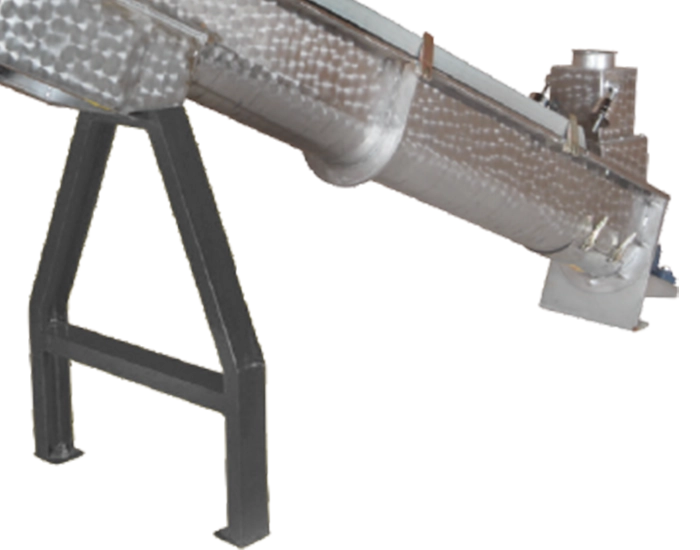
The general logic of angled and forced design is built on maximizing grain and water contact. The angled placement allows grain to stay longer in the system and mix under gravitational effect, while the forced moistening mechanism provides controlled and intensive penetration of water into grain kernels. This combination shortens conditioning time while improving moistening quality.
The effects of grain conditioning on flour quality and yield are of serious importance for mill economics. Properly conditioned wheat provides optimal grinding performance, improves flour color, preserves protein quality, and increases extraction rate. Angled Forced Conditioning maximizes these effects, directly contributing to mill efficiency.
The contribution of angled design to moistening effectiveness comes from optimizing grain flow and increasing contact time. As grains move on the angled plane, they follow a longer path and mix homogeneously. This movement ensures effective contact of each grain kernel with water and prevents the formation of hidden dry spots.
The forced moistening system and its working principle are based on applying water at optimum pressure and droplet size through precision nozzles. This system provides active and controlled water transfer instead of passive moistening. Specially designed nozzles accelerate water penetration into grain kernels.
The structure providing rapid and homogeneous moisture penetration is the most important advantage of Angled Forced Conditioning. Both angled design and forced moistening accelerate moisture penetration and provide more homogeneous conditioning results. This achieves uniform moisture distribution throughout the entire grain batch.
Shortening conditioning time compared to traditional systems provides time and space savings. With Angled Forced Conditioning, conditioning time can be reduced by 30-50% depending on grain type. This provides great advantages especially for facilities with limited conditioning silo capacity.
Ensuring more balanced moisture distribution within grain directly affects final product quality. Homogeneously moistened grain provides more consistent results during grinding and shows less variation in quality parameters of produced flour.
Optimum angle calculations and technological foundation are based on years of research and development work. Tanış engineers, through their studies on grain flow dynamics, have determined that angles between 32-38 degrees provide optimum mixing and contact time. This angle guarantees both sufficiently fast grain flow and adequate contact time.
Design features for grain flow and water application have been developed through detailed flow simulations. The angled surface is equipped with special grooves and guides. This structure ensures smooth and controlled grain flow while strategic placement of water nozzles creates maximum contact area.
Design solutions for maximum contact area and efficiency optimize system performance. Special patterns on the inner surface and grain flow guides ensure continuous mixing of grain and contact of each kernel with water. These solutions significantly increase conditioning effectiveness.
Angled Forced Conditioning: Technical Specs & Performance
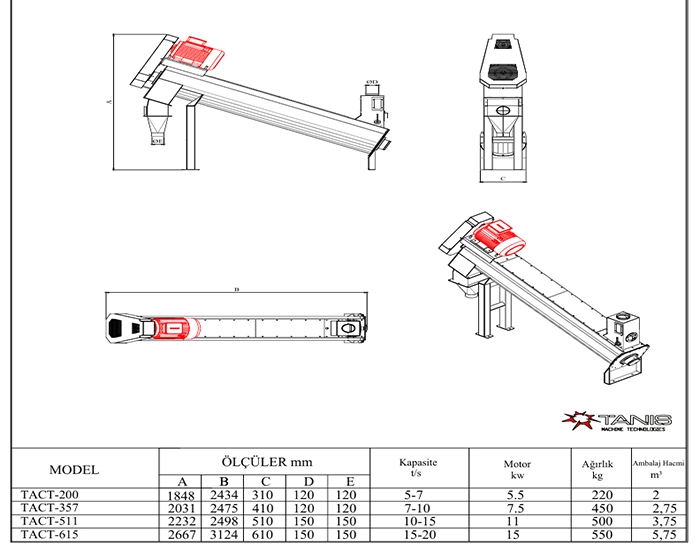
Tanış Angled Forced Conditioning is offered in various technical specifications:
- Dimensions: 1200x800x1600mm – 2000x1000x2200mm (depending on model size)
- Capacity: 5-30 tons/hour (varies by model and grain type)
- Weight: 350-800 kg (depending on model size)
- Water Pressure Requirement: 2-4 bar
Water dosing system and precision values provide fully controlled moistening. Electronic flow meters and proportional control valves can dose water with ±0.1% precision. This precision guarantees exact achievement of desired moisture content.
Processing capacity depends on model size and grain type. ACT-10 model has processing capacity up to 10 tons per hour, ACT-20 model up to 20 tons, ACT-30 model up to 30 tons, and ACT-40 model up to 40 tons per hour. This wide capacity range offers a suitable solution for mills of every scale.
Water consumption and efficiency ratios have been minimized through optimized design. More than 98% of water applied to grain is absorbed by the grain, meaning minimum water waste. High-pressure nozzles provide maximum moistening effectiveness with low water consumption.
Control and adjustment mechanisms offer ease of use. Touch control panel allows precise adjustment of parameters such as water flow rate, grain feed rate, and moistening percentage. Optionally, it can be integrated with fully automatic moisture control system.
Model Varieties and Capacity Options
Model alternatives are offered for different production scales:
- TMCT-200: 4-5 tons/hour capacity for small enterprises
- TMCT-357: 12-15 tons/hour capacity for medium-scale mills
- TMCT-511: 15-20 tons/hour capacity for large facilities
- TMCT-615: 20-30 tons/hour capacity for industrial-scale facilities
Capacity ranges and selection criteria are determined according to mill size, grain type, and conditioning targets. Tanış engineering team provides technical support for selecting the most suitable model for your needs.
Configuration options are available for special applications. Customizations such as additional moistening capacity for high-moisture grains, adapted nozzle systems for special grain types, or automatic cleaning mechanisms can be made.
Moistening Performance and Moisture Penetration
The ability to provide rapid and effective moisture penetration is the most important performance indicator of Angled Forced Conditioning. Specially designed nozzles and forced moistening system enable water to quickly penetrate grain kernels. This rapid penetration significantly shortens conditioning time.
Homogeneous moistening and conditioning quality are essential for consistent flour production. Angled Forced Conditioning provides uniform moisture distribution throughout the grain batch with ±0.3% deviation. This homogeneity offers consistent performance and quality during grinding.
Performance values for different grain types and hardness levels demonstrate system versatility. Shortened conditioning times can be achieved: 6-8 hours for hard wheat, 4-6 hours for soft wheat, and 8-12 hours for durum wheat. These times are 30-50% shorter than traditional systems.
Grain moisture penetration test results and data have been scientifically validated. Laboratory analyses show that grains moistened with Angled Forced Conditioning have uniform moisture distribution to the kernel center even after 2 hours. This rapid penetration significantly increases operational efficiency.
Conditioning Time and Effectiveness Factors
The conditioning time advantage compared to traditional systems is evident. Instead of classic conditioning typically requiring 12-24 hours, this time can be reduced to 4-12 hours with Angled Forced Conditioning. This time saving provides flexibility in production planning and savings in silo capacity.
Optimum moistening times by grain type are:
- Soft wheat: 4-6 hours
- Hard wheat: 6-8 hours
- Durum wheat: 8-12 hours
- Corn: 6-8 hours
Factors affecting penetration speed include grain hardness, initial moisture content, target moisture content, and kernel size. By optimizing conditioning parameters according to these factors, maximum efficiency is achieved.
Recommended process parameters for effective conditioning are determined by Tanış engineers for each application. Parameters such as water pressure, nozzle type, grain flow rate, and inclination angle are adjusted according to specific conditioning targets.
Effect on Flour Quality and Yield
The contribution of effective conditioning to bran-endosperm separation is the foundation of grinding efficiency. Homogeneous and optimum moistening makes grain bran more elastic while making endosperm more brittle. This contrasting structure provides clean separation during grinding and minimizes mixing of bran particles into flour.
The effect of homogeneous moisture distribution on flour quality is evident. Equal moistening throughout the grain batch provides uniform results during grinding. This consistency means less variation in flour quality and higher quality standards.
Extraction rate and yield improvements provide direct economic benefit. Extraction rate can be increased by 1-2% with Angled Forced Conditioning use. In high-capacity mills, this increase creates significant economic value on an annual basis.
Positive effects on final product quality increase customer satisfaction. Whiter flour color, lower ash content, and better baking properties are direct results of effective conditioning process. Improvement in these quality parameters provides competitive advantage in the market.
Installation and System Integration
Easy integration into existing mill lines is possible thanks to the modular design of Angled Forced Conditioning. Standard input and output connections can be adapted to existing systems with minimum modifications. This flexibility is ideal for both new installations and modernization projects.
Minimum space requirement and compact design ensure efficient use of facility space. Thanks to its vertical structure, it requires a small footprint. This feature provides great advantage especially in facilities with space constraints.
Water and connection requirements are simple: clean water connection at 2-4 bar pressure, electrical connection (usually 380V three-phase), and standard grain input-output connections are sufficient. Optionally, PLC connection can be added for automatic control.
Installation process and commissioning operations are managed by professional Tanış technical team. A typical installation can be completed within 1-2 days and requires minimum production interruption. During commissioning, the system is calibrated according to your facility’s specific conditions.
Usage and Operating Features
Practical use and easily adjustable parameters enable operators to manage the system efficiently. Simple and understandable control interface facilitates basic parameter adjustments. Key parameters include:
- Grain feed rate
- Water flow rate
- Target moisture content
- Nozzle pressure
Daily operating requirements and control points require minimum operator intervention. Routine controls consist of water pressure and flow control, nozzle cleaning, and grain flow control. The system is designed to operate largely automatically.
Water pressure and flow adjustments directly affect moistening effectiveness. For optimum performance, stable water pressure between 2-4 bar and flow rate adjusted according to grain type are recommended. Pressure regulators and flow meters provide precise control of these parameters.
Recommendations for optimum performance are provided by Tanış technical team. Recommended settings for each grain type and target moisture content are detailed in the user manual. Following these recommendations ensures maximum conditioning effectiveness.
Maintenance and Service Convenience
Low maintenance requirements and easy cleaning reduce operating costs. Simple structure and few moving parts minimize failure risk. Stainless steel surfaces and easily accessible sections simplify cleaning operations.
Nozzle maintenance and replacement are fundamental elements of routine maintenance. Nozzles are designed to be easily accessible and can be removed without tools. Periodic cleaning and inspections guarantee nozzle performance and longevity.
Water filtration and line cleaning are important for maintaining system performance. Using high-quality water filters in the inlet line prevents nozzle blockages and extends system life. Periodic line cleaning prevents lime and mineral buildup.
Spare parts and service support are guaranteed by Tanış A.Ş. All common spare parts are kept in stock and fast shipping is provided. Additionally, professional service team is ready for rapid intervention when needed.
Water Efficiency and Conservation Features
Optimized water consumption and conservation mechanisms minimize resource use. Precision nozzle technology ensures most of the water is absorbed by grain. Water waste and leakage seen in traditional systems are prevented thanks to Angled Forced Conditioning design.
Fully controlled dosing and preventing water waste provides sustainable operation. Electronic flow control systems guarantee exactly the required amount of water use. This precise control provides both water savings and optimum moistening.
Ability to work effectively with low water pressure provides energy savings. The system can perform effective moistening even at pressures as low as 2 bar. This feature eliminates high-pressure pump requirement, reducing energy consumption.
Environmental sustainability advantages are evident. Low water and energy consumption reduces environmental footprint. Additionally, requiring fewer conditioning silos increases facility efficiency while optimizing resource use.