
Our Solutions That Make a Difference in the Milling Industry
As Tanış A.Ş., we share with you our sectoral success stories shaped by our experience of more than 60 years in the milling industry, showing how we transform the unique challenges faced by our customers into innovative solutions. Each success story is an evidence-based case study that details all stages from the sectoral challenge encountered to the solution implemented, from the project process to the concrete results obtained. You can discover the value created by the solutions we offer across a wide range, from flour mills to legume processing facilities, from special-purpose flours to industrial production lines, from energy optimization to full automation. In each of our projects, we analyze our customers’ needs in depth and offer customized technological solutions, providing efficiency increases, quality improvements, and cost optimization. These success stories demonstrate that Tanış A.Ş. is not just an equipment supplier, but a reliable strategic partner offering comprehensive solutions in every area of the milling industry. We recommend examining our success stories to discover our experience and expertise that will help you overcome the specific challenges of your sector.
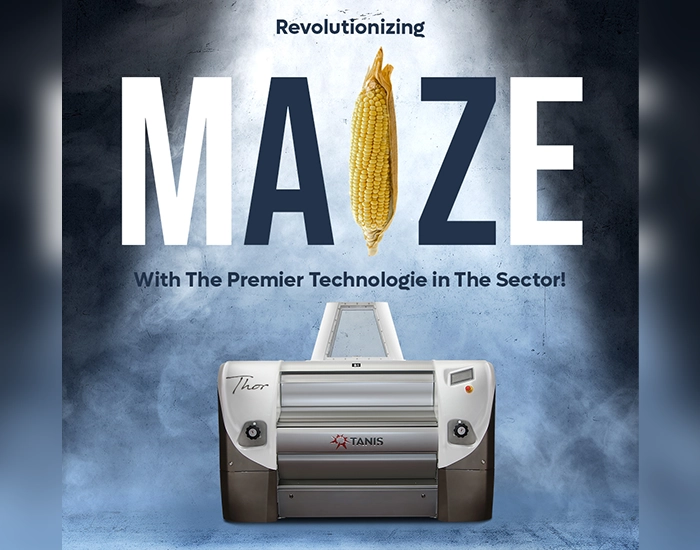
In various quality improvement projects, TANIS provides technological transformation through advanced equipment solutions. Projects typically include color sorters, new generation corn dehullers, and high-efficiency vertical degerminators that are commissioned in phases. These transformations result in significant improvements in oil content ratios, capacity increases per machine, and enhanced product purity and quality standards. These cases demonstrate how quality and capacity can be improved together through on-site engineering solutions and customer collaboration.
Integrated Processing Facilities
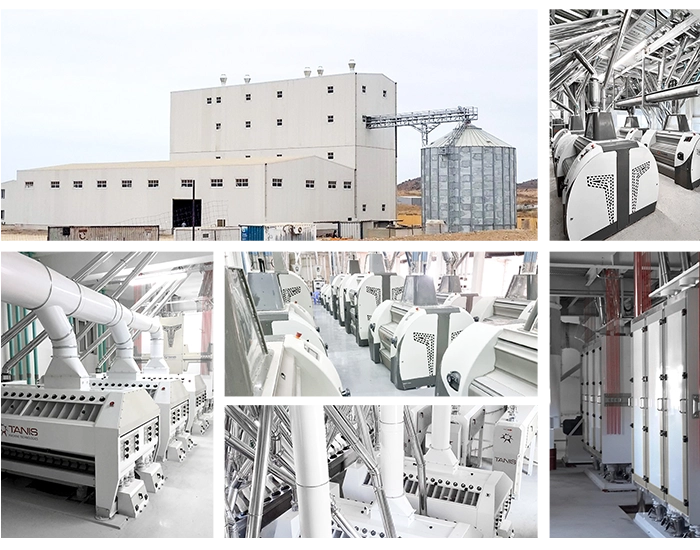
Large-scale integrated processing complexes represent major achievements in facility design and implementation. These projects feature systems designed to process multiple grains under one roof with separate lines, incorporating drying units, packaging lines for various package types, raw material storage areas, and simultaneous production capabilities for different flour, semolina, and bran products. Such facilities often become reference examples not only regionally but across entire continents.
Seed improvement facilities represent important contributions to rural development programs. These projects typically involve multiple facilities with specific capacities, completed as turnkey projects within tight timeframes. To ensure operational sustainability of each facility, local personnel undergo comprehensive training programs to obtain operator certification. These projects provide concrete contributions to regional development by improving the quality and efficiency of local agricultural production.
Specialized Production Technologies
The establishment of specialized production lines demonstrates strategic expansion in technology offerings. These initiatives often result in increased general production capacity and enhanced market positioning. Strategic locations and sectoral positioning contribute to achieving leadership positions in specific technology sectors both domestically and internationally.
TANIS creates global impact by sharing its sectoral knowledge accumulation not only through production but also on international education platforms. Through technical presentations at regional training forums organized by international associations in various countries, we proudly represent our country. By sharing our experience in milling technologies, process optimization, and facility efficiency with sector professionals, we have become a reliable source of knowledge in the global arena. TANIS will continue this knowledge-sharing mission and will actively participate in many international organizations in the future.
Village-Level Agricultural Technology
Historical projects involving village-level agricultural technology demonstrate commitment to rural development. These initiatives typically involve manufacturing and delivery of village-type seed cleaning units, with systems designed according to specific needs for different settlement sizes. Through such projects, seed quality is improved in regional villages, and farmers’ ability to clean and improve their own local seeds is strengthened.
TANIS entered the international market through early export initiatives. Initial international projects involved legume cleaning and sorting systems delivered to various regions, with on-site installation and commissioning work performed by TANIS engineers. These early exports became the starting point of TANIS’s quality, engineering, and trust-based export vision and formed the foundation of global successes in subsequent years.
Traditional Process Modernization
Between 1970-1980, regional production was still carried out using traditional methods with manual processes. TANIS modernized these challenging and inefficient processes by starting to produce the first closed, automatically fed processing machines in Turkey. Approximately 500 machines were shipped nationwide over ten years, pioneering the transformation of the industry, particularly in Southeast Anatolia. These machines brought high hygiene, capacity, and work safety to the sector, becoming a turning point in industrial production.
TANIS carried out technology development for specialized processing by bringing processing and handling technology developed for the first time in Turkey to the international market. These facilities often held the distinction of being the first automatic processing facilities nationwide, establishing new standards in the region in terms of both production hygiene and efficiency. Systems developed with TANIS’s engineering power became turning points not only for Turkey but also for regional markets.
Modern Milling System Export and Expansion
TANIS began modern roller mill production in 1987, initially exporting to countries in North Africa and the Middle East, then continuing its expansion in markets with compact chassis systems. These systems stood out with fast installation, low space requirements, and suitable investment costs for that period, moving TANIS from being a regional mill supplier to a strong player in the global market. Today, modernization, parts replacement, and capacity increase demands are still received for these systems; some old installations are renewed with new generation solutions and brought back into production.

Historical Foundation and First Mastery Period
The First Roller Mill Installation
The arrival of the first roller mill and the TAN family’s first mastery period in milling represents the historical foundation of the company. The first roller mill came as German-origin equipment imported by a renowned businessman. For installation, only grinding unit components were brought from Germany, while all construction and assembly work was completed with local craftsmanship. During this period, a recognized local craftsman gained the appreciation of the German engineer and was included in the assembly process, with the mill commissioned after meticulous work.
The Second Roller Mill and TAN Family Involvement
Following this process, the second roller mill was also brought from Europe, and members of the TAN family personally took part in the assembly process. This mill was installed for prominent business figures and these efforts played a critical role in laying the foundations of what would later become one of Turkey’s largest pasta producers. The TAN family’s contribution during this process is one of the cornerstones of both industrial heritage and TANIS’s engineering culture.